
The Korean Peninsula may be headed toward more uncertainty as North Korean leader Kim Jong-un accelerates the development of nuclear-powered submarines and advanced missile systems — moves that experts say are fundamentally reshaping regional security dynamics and driving instability across Northeast Asia.
Kim, who has steered the country away from direct engagement with Seoul while taking an ambiguous stance on talks with US President Donald Trump, has taken to directly criticizing Seoul’s nuclear-powered submarine plans and using them to justify Pyongyang’s armament drive.
According to the Korean Central News Agency, Kim said that Seoul’s plan to build nuclear-powered submarines will “worsen the instability in the region,” calling the move a threat to the North’s national security.
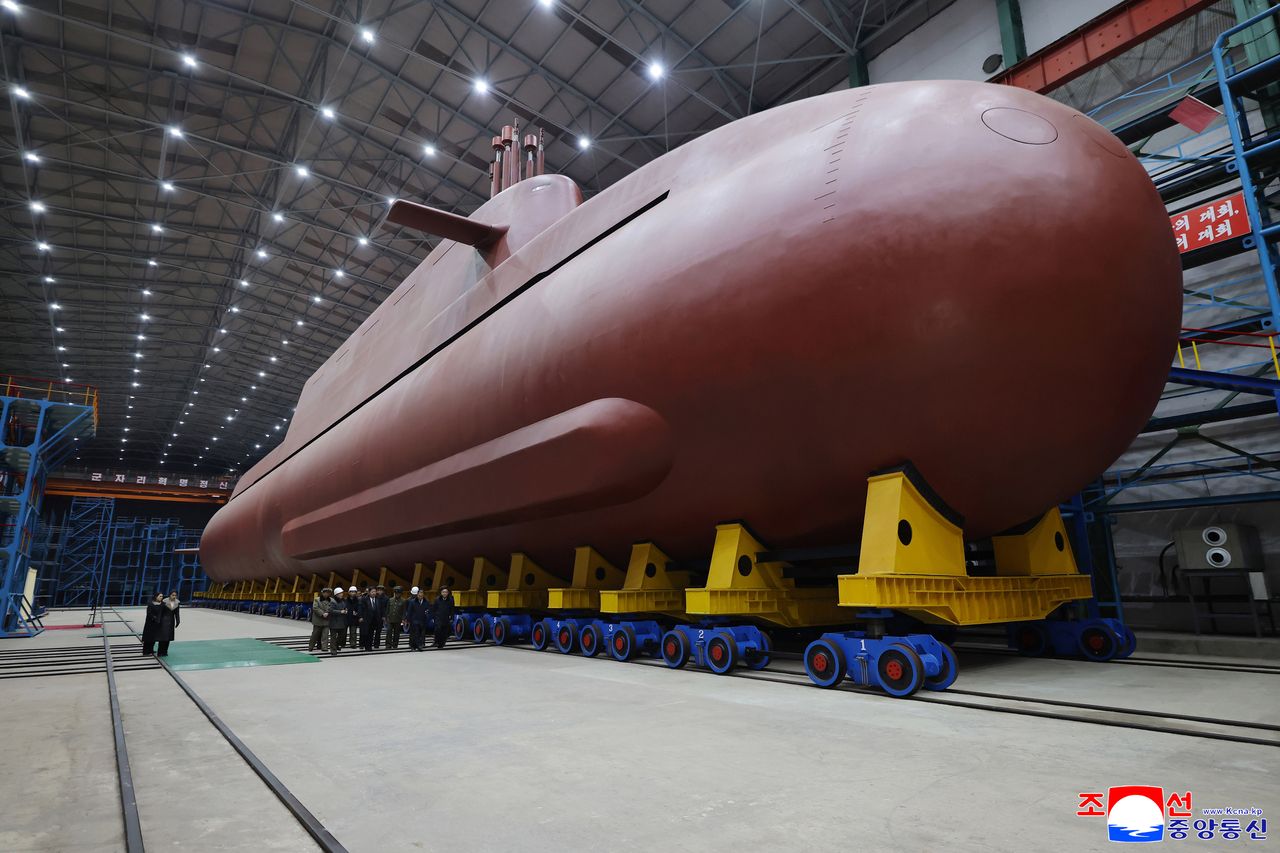
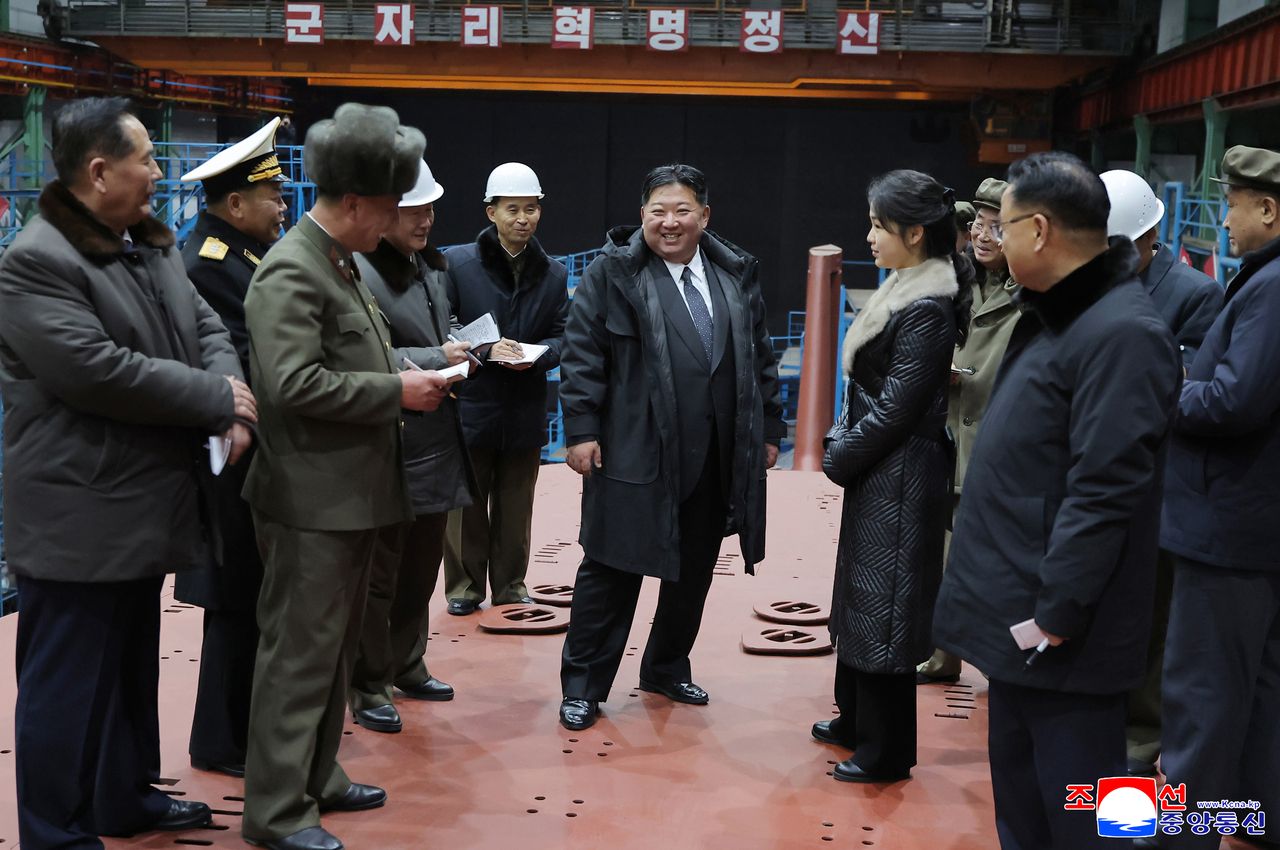 Kim made the remarks during an on-site inspection of an 8,700-ton nuclear-powered strategic guided missile submarine under construction. He warned that Seoul’s pursuit of nuclear submarines is an “offensive act that severely violates (North Korea’s) security and maritime sovereignty.”
Calling the effort “a threat to its security that must be countered,” Kim reaffirmed Pyongyang’s stance to reinforce its nuclear forces to deter adversaries.
“It is necessary to make the enemy understand with no doubt that they will surely be forced to pay a dear price when they violate the security of the DPRK’s strategic sovereignty and that they will face a merciless retaliatory attack if they try to select a military option,” he said. DPRK stands for the Democratic People’s Republic of Korea, the official name for North Korea.
“The DPRK will continue to show such capabilities, and this goes just as the responsible exercise of the true nuclear war deterrent and a reliable shield for defending sovereignty,” Kim noted.
Kim described the new submarine as “an epoch-making crucial change … (in) the war deterrent level” and affirmed “the strategic and tactical policy to steadily push forward with the nuclear weaponization of the navy.”
Thursday’s KCNA report indicates the North is developing a nuclear-powered submarine equipped with guided missiles — a project first unveiled at a ruling party congress in 2021.
The North Korean leader said newly built attack destroyers and nuclear submarines would be a “leap forward in bolstering up the combat capabilities of our fleets.” He also vowed to “increase and expand the speed and scale of building various surface and underwater warships and continuously equip them with different offensive weapon systems.”
During his inspection, Kim reviewed research on “new underwater secret weapons” under development and unveiled plans to reorganize naval forces, according to KCNA.
While Kim blames Seoul’s ambitions for worsening tensions, experts say North Korea itself is driving the dangerous shift in regional security.
 “Kim Jong-un is probably right that a buildup of nuclear-powered submarines will increase instability around the Korean Peninsula, but he has himself to blame for the arms race,” said Leif-Eric Easley, a professor at Ewha University in Seoul.
“It is Pyongyang that disavows diplomacy with Seoul, threatens its neighbors with nuclear weapons, and deepens the suffering of its own people by devoting massive resources to military dictatorship rather than economic development,” he added.
Easley noted that Kim “may realize that he has miscalculated once he observes South Korea’s superior technology” or if the North faces naval accidents or dwindling support from Moscow and Beijing.
Other analysts warn that the region’s security dynamics are shifting from land to strategic underwater confrontation.
“North Korea’s recent actions — ranging from publicly showcasing a nuclear-powered submarine under construction to test-firing a new long-range air defense missile — have heightened uncertainty on the Korean Peninsula and across Northeast Asia as the region enters 2026,” said Lim Eul-chul, a professor at Kyungnam University’s Institute for Far Eastern Studies.
Lim stressed that Pyongyang’s emerging capability “is no longer a hypothetical threat but a tangible and imminent reality.”
“Military competition between the two Koreas is set to intensify, while prospects for inter-Korean dialogue will further diminish,” he said.
He warned that the North is seeking a “balance of terror” by portraying the security environment as a direct US-North Korea nuclear standoff, while undermining South Korea’s autonomy.
Lim added that the 8,700-ton submarine — believed capable of carrying long-range ballistic missiles that could threaten the US mainland — is intended to send a message that “no outside actor can block” North Korea’s nuclear advancement.
North Korea on Wednesday also conducted a test launch of a new high-altitude, long-range surface-to-air missile over the East Sea, with Kim observing the launch, KCNA said.
“The launched missiles accurately hit the mock targets at an altitude of 200 kilometers,” the report said, calling the test part of “routine activities” to enhance antiaircraft capabilities.
Seoul’s Joint Chiefs of Staff confirmed Thursday it had detected the launch.
“Under a firm South Korea-US combined defense posture, our military is closely monitoring North Korea’s activities and maintains the capability and readiness to respond overwhelmingly to any provocation,” the JCS said.
The North’s latest provocations come as South Korea is moving forward with its own plans to acquire nuclear-powered submarines — an initiative South Korean President Lee Jae Myung has argued is essential for national defense amid Pyongyang’s advancing underwater strike capabilities.
During a summit in late October, Lee secured explicit US approval from President Donald Trump to pursue the development of nuclear-powered submarines. Trump posted to his social media that Washington had “given them approval to build a Nuclear Powered Submarine,” marking a major policy shift that would allow Seoul to upgrade beyond its current diesel-powered fleet. The two leaders also agreed to pursue a separate bilateral agreement that would enable the United States to supply low-enriched uranium fuel for the submarines, a significant exemption under US nuclear export controls.
South Korean defense officials emphasize that the submarines will run on low-enriched uranium below the proliferation-sensitive threshold, underscoring Seoul’s commitment to non-nuclear weapons principles while expanding its deterrence posture beneath the waves.
Despite the rapid militarization surrounding the peninsula, the Lee administration continues to seek diplomatic engagement with the North.
In November, Seoul proposed military talks aimed at clarifying the Military Demarcation Line — the government’s first official overture for direct talks since Lee took office in June. The initiative was framed as a step toward restoring severed communication channels and reducing the risk of miscalculation.
But the proposal has received no response from Pyongyang.
North Korea maintains its designation of South Korea as an “enemy state” and has dismissed Seoul’s defense modernization efforts — particularly its push for nuclear propulsion — as subservience to US strategy.
- [Photo News] Nongshim lights up London’s Piccadilly Circus
- Subsidy for exiting prostitution faces backlash after viral complaint
- Ruling party chair apologizes for floor leader’s graft scandal
- SK Chemicals bolsters new drug development through open innovation
- Seventeen tops Billboard’s 2025 K-pop artist list


Most Commented