
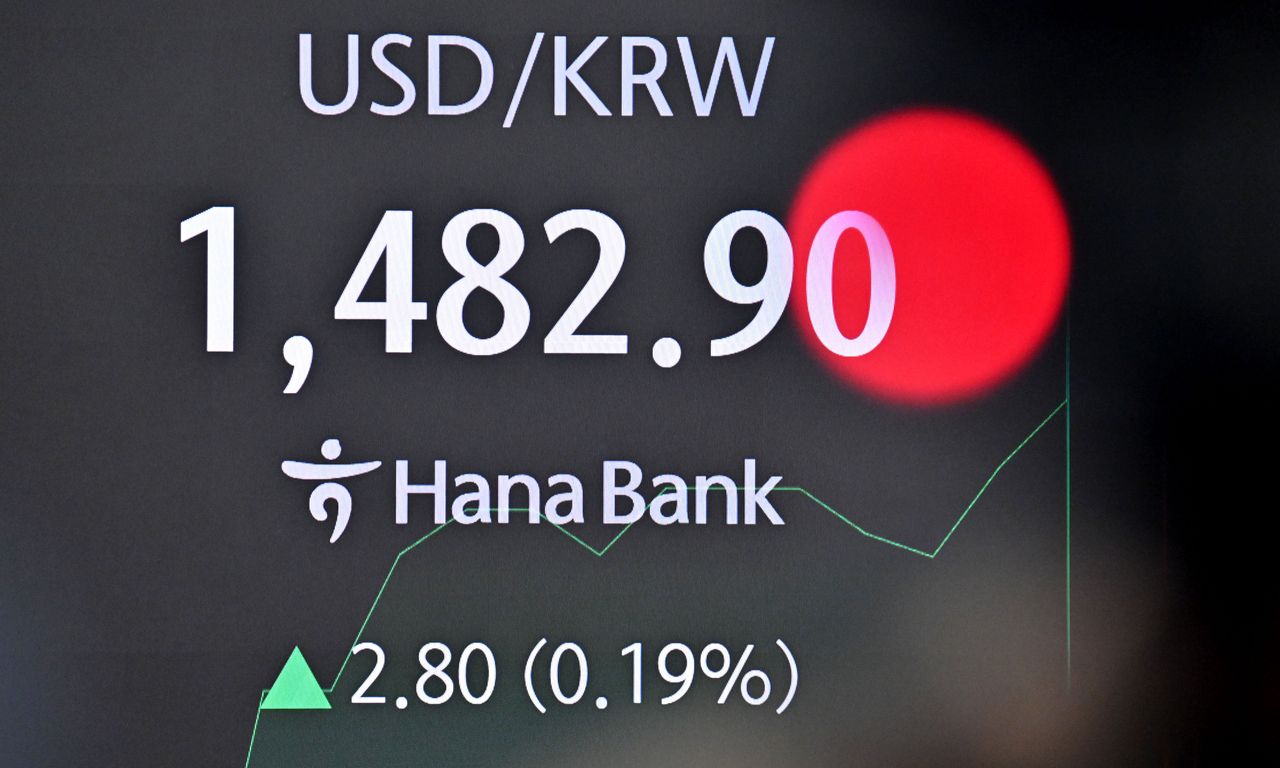
 Major global investment banks are raising their inflation forecasts for South Korea, citing the depreciation of the won as weighing on consumer prices.
A Bloomberg tally of projections from 37 major institutions showed that the median forecast for the country’s consumer price inflation next year rose to 2 percent as of mid-December, up 0.1 percentage point from late November.
During the first two weeks of December, 14 institutions raised their inflation forecasts, while three lowered their projections. The remaining institutions maintained their previous outlooks.
Bank of America and Credit Agricole each raised the outlook by 0.3 percentage point, from 1.8 percent to 2.1 percent. S&P Global revised its projection up to 2 percent from 1.9 percent, while Fitch increased its forecast from 2 percent to 2.2 percent.
Nomura lifted its inflation outlook from 1.9 percent to 2.1 percent, BNP Paribas raised its forecast from 2 percent to 2.1 percent, and JPMorgan Chase revised its projection upward to 1.7 percent from 1.3 percent.
The investment banks’ consensus on rising inflation mirrors that of Korea’s central bank.
On Nov. 27, the Bank of Korea raised its forecast for next year’s consumer price growth to 2.1 percent from 1.9 percent, citing the weaker won and a recovery in domestic demand.
“The exchange rate has a significant impact on prices,” BOK Gov. Rhee Chang-yong said at a press conference on inflation targeting held on Dec. 17.
“Though the situation does not constitute a ‘traditional’ financial crisis and I have fewer concerns on such note, it still can be described as a crisis in other aspects, which is very concerning,” Rhee said.
For Korea, a country heavily dependent on energy imports, a weaker won puts upward pressure on import prices, feeding into higher prices across the economy. Higher prices, in turn, dampen domestic consumption and weigh on growth.
According to the BOK, the recent dip of the won could drive up inflation beyond the 2.1 percent forecast given for the next year.
The won closed daytime trading Thursday at 1,449.8 per dollar, strengthening by 33.8 won from the previous session after strong verbal intervention by local foreign exchange authorities.
- [Photo News] Nongshim lights up London’s Piccadilly Circus
- Subsidy for exiting prostitution faces backlash after viral complaint
- Ruling party chair apologizes for floor leader’s graft scandal
- SK Chemicals bolsters new drug development through open innovation
- Seventeen tops Billboard’s 2025 K-pop artist list








Most Commented